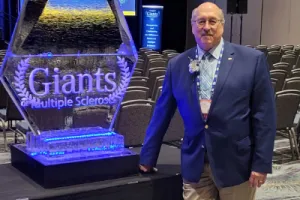
Mark Freedman
HBSc, MSc, MD, CSPQ, FAAN, FRCPC
Senior Clinician Scientist, Neuroscience
Ottawa Hospital Research Institute
Professor of Medicine, Neurology
University of Ottawa
Director, Multiple Sclerosis Research Unit
Neurology
Bio
Dr. Freedman is currently professor of medicine in the field of neurology at the University of Ottawa, as well as director of the Multiple Sclerosis Research Unit at the Ottawa Hospital, General Campus and a Senior Scientist at the Ottawa Hospital Research Institute. A graduate of the University of Toronto, Dr. Freedman holds his Masters Degree in Molecular Neurochemistry and continued his postgraduate work specializing in neurology and neuroimmunology. His specialized training took him to the Weizmann Institute of Science, Israel; The National Hospital, Queen Square, London UK, as well as the Montreal Neurological Institute, where he subsequently was an Assistant Professor. He holds his specialist certification in Quebec CSPQ and all of Canada FRCP(C) and is a Fellow of both the American Neurological Association (FANA) and the American Academy of Neurology (FAAN).
Dr. Freedman has published over 250 pieces, including articles, books, book chapters and abstracts and has been invited to give hundreds of lectures and presentations nationally and internationally. His extensive research includes the area of molecular neurochemistry, cellular immunology, neuroimmunology and clinical studies in MS. He is currently holding peer reviewed and industry related funding for translational research investigating immune mechanisms of damage in multiple sclerosis, with particular interest in the role of gamma-delta T-cells. He is also the lead investigator in the Canadian Bone Marrow Transplant Study in MS and co-chair of the International Mesenchymal Stem Cell Transplantation Study Group.
Dr. Freedman has over 25 years of experience in the management of patients with multiple sclerosis and has been the principal investigator on numerous clinical trials with new therapeutic agents for MS. He has experience from serving on several research study steering committees as well as data safety monitoring boards. He serves on the editorial boards for several journals including the Multiple Sclerosis Journal. He has also served on several national and international committees and is currently the Treasurer of the Americas Committee for Treatment and Research in MS (ACTRIMS).
Research Goals and Interests
 |
Major Research Activities
Stem cells as a potential treatment for MS
The role of gamma delta T cells in the pathogenesis of MS
The role of cytokines in MS disease progression or response to therapy
Current and Future Research
Multiple sclerosis research has been exploding in recent years with the advent of new tools both in neuroscience and immunology to further our understanding of the disease. My own focus of research has been concentrated in 3 areas:
Basic Neuroimmunology
Within the past 5 years, I have supervised 2 PhD students to completion. Both projects revolve around my focus for the past decade on the innate immune system and in particular, gd T cells . Work done mostly by Zhihong Chen has examined a unique feature of these cells to cytolyse cells using the mechanism of antibody-dependent cell cytotoxicity via their Fc receptors. His work has revealed that patients particularly with the progressive phase of their illness display the greatest number of Fc bearing gd T cells. Research has revealed also a number of antibodies to myelin that may be playing a role at this stage and our hypothesis is that these antibodies can direct gd T cells to injure oligodendrocytes. In collaboration with Dr. Jack Antel at the MNI, Zhihong has shown this to be the case.
In a separate project together with Peter Stys, Jennifer (Beveridge) Black concentrated on a model of in vitro demyelination that Peter and I developed together, wherein we can inject cells generated in my laboratory directly into a rat optic nerve and watch how they cause damage to myelin and axons. Jennifer chose to move to Calgary for the first couple of years of this project and then to returned here for the latter part to work with the immune cells.
Clinical Investigator-Driven Research
Together with Harry Atkins, our work on the Canadian bone marrow transplantation has gained international notoriety. Our observations have been seminal and has generated many new observations not only clinically, but through the vast imaging and immunological monitoring developed in conjunction with our colleagues, to follow this unique group of patients who undergo autologous stem cell transplantation following complete immune ablation. We have recently received a new grant from the MS Foundation to examine, in particular, some of our observations that the disease is not only halted following this treatment, but some patients make some miraculous recovery, suggesting repair of the CNS. We have hypothesized several mechanisms that might explain this phenomenon and have laid out a series of studies to help substantiate these.
In a separate and new venture, Harry and I are working on developing a new technology to try on our more progressive patients; that of mesenchymal stem cell (MSC) transplantation. These cells would not require a complete immune ablation such that patients will be spared the morbidity of that procedure. Together with a world renowned scientist in Montreal for his work on growing MSC we now have a viable protocol that has been brought to clinical testing. We are presently taking part in a multi-country clinical trial known as MEsenchymal Stem cell therapy for CAnadian MS patients-MESCAMS of which I am the Primary Investigator for Canada with James Marriott being a co-PI for a Manitoba-only site.
Clinical Industry-Driven Research
It would appear that there is no end to new studies with a vast array of new agents that bring to the table less morbidity and novel targeted immune therapies, from small molecules aimed at controlling either the expression of a receptor or the release of cytokines, to more focused monoclonal antibody treatments. Studies are now focusing on all phases of MS including the more later stages with agents that might be capable of regeneration or repair. As a member of many steering committees and consultant to several companies, I have been assisting in the development of these trials and hope to keep TOH at the forefront of MS research.