Treating spinal muscular atrophy before birth

Recent treatment breakthroughs for spinal muscular atrophy (SMA) have changed the lives of children with this disease. Early treatment works best and begins soon after babies are born. However, even this early treatment is not a cure.
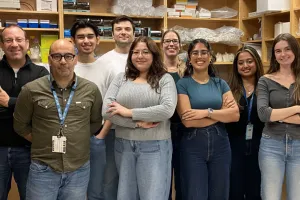
This is because the damage caused by the genetic disease likely starts before birth. With that in mind, Dr. Rashmi Kothary’s team at The Ottawa Hospital and the University of Ottawa tested the impact of SMA treatment during pregnancy on mouse models of the disease.
The researchers gave pregnant mice a drug similar to risdiplam, an approved SMA therapy that can reach the fetus through the placenta. Treatment was stopped at birth to assess the benefit of prenatal therapy.
The results published in Annals of Neurology and this video abstract showed that prenatal treatment was safe for the pregnant mouse, and substantially increased the weight, muscle function and survival of their SMA offspring.
“Prenatal SMA therapy had impressive impacts on mice right after birth, but it wasn’t enough to maintain motor nerve cell health later in life,” says postdoctoral fellow Dr. Emma Sutton, who led the study. “This suggests a combination of prenatal and postnatal treatment would provide the best therapeutic outcomes for patients with SMA.”
In the recent first clinical attempt to treat SMA prenatally, the baby also received treatment after birth and had no SMA symptoms at 2.5 years. However, more research is needed to better understand the impacts and safety of this approach.
Authors:
Emma R. Sutton, Ariane Beauvais, Rebecca Yaworski, Hugh J. McMillan, Rashmi Kothary
Funding:
Muscular Dystrophy Canada, Canadian Institutes of Health Research, Cure SMA
Learn more about:
The Ottawa Hospital is a leading academic health, research and learning hospital proudly affiliated with the University of Ottawa and supported by The Ottawa Hospital Foundation.