

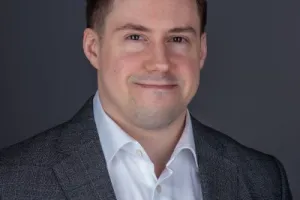
Joseph Shaw
MD MSc FRCPC DRCPSC
Clinician Scientist, Inflammation and Chronic Disease
Ottawa Hospital Research Institute
Early Career Investigator Chair, Department of Medicine
University of Ottawa
Assistant Professor, Department of Medicine
University of Ottawa
Director - Research Plus Program, Department of Medicine
University of Ottawa
Contact
https://scholar.google.com/citations?user=qPrPkI5lpIUC&hl=en www.linkedin.com/in/josephrshaw
Bio
Joseph R. Shaw, MD, MSc, FRCPC, DRCPSC, is a hematologist and thrombosis medicine specialist at The Ottawa Hospital and an Associate Scientist in the Inflammation and Chronic Disease Program at the Ottawa Hospital Research Institute (OHRI). He is an Assistant Professor in the Division of Hematology, Department of Medicine, with a cross-appointment to the School of Epidemiology and Public Health, at the University of Ottawa. He holds the Department of Medicine Early Career Investigator Chair and is Director of the Research+ Program.
Dr. Shaw leads a clinical and translational research program in thrombosis, hemostasis, and anticoagulation. His research integrates anticoagulant pharmacokinetics and pharmacodynamics, direct oral anticoagulant (DOAC) measurement, thrombin generation assays, coagulation biomarkers, and clinical outcomes to improve perioperative anticoagulation management, anticoagulant-associated bleeding and reversal, and the investigation of breakthrough thrombosis during anticoagulant therapy. His work spans venous thromboembolism (VTE), atrial fibrillation, and high-risk populations including patients with active cancer, mechanical heart valves, chronic kidney disease, and thrombotic antiphospholipid syndrome.
Dr. Shaw co-leads PAUSE-2, a CIHR-funded multicentre randomized trial comparing perioperative DOAC management strategies for patients undergoing high-bleed-risk surgery or neuraxial procedures, and ACE-HIGH, a CIHR-funded multicentre prospective management study of perioperative anticoagulation in patients with active cancer. He is Principal Investigator of CODEBREAKER, funded through the University of Ottawa Faculty of Medicine Translational Research Grant, which seeks to define clinically actionable pharmacodynamic anticoagulation targets using thrombin generation. He also led GAUGE, a prospective cohort study evaluating four-factor prothrombin complex concentrate in factor Xa inhibitor-associated major bleeding or urgent surgery.
Recent major contributions include:
- The SONAR study of perioperative direct oral anticoagulant levels, thrombin generation, and bleeding. This nested case-control and causal mediation study linked higher residual preoperative DOAC concentrations with postoperative bleeding and showed that this association was partly mediated through impaired thrombin generation. The findings provide a mechanistic basis for more individualized perioperative anticoagulant assessment. https://www.thieme-connect.de/products/ejournals/abstract/10.1055/a-2521-0923
- ISTH SSC guidance on surgical and procedural bleeding-risk stratification. Dr. Shaw led this international, multidisciplinary guidance, which provides a standardized framework for classifying the bleeding risk of surgeries and procedures in anticoagulated patients. The framework supports more consistent perioperative anticoagulation decisions, institutional protocols, clinical research, and future guideline development. https://www.jthjournal.org/article/S1538-7836(26)00055-3/abstract
- The GAUGE prospective study of prothrombin complex concentrate in factor Xa inhibitor-associated bleeding and urgent surgery. In 101 episodes, the study showed that four-factor prothrombin complex concentrate increased thrombin generation without reducing factor Xa inhibitor levels. These findings clarify its role as a nonspecific prohemostatic therapy rather than a direct anticoagulant reversal agent. https://ashpublications.org/bloodadvances/article/10/15/5378/569098/Effect-of-PCC-on-thrombin-generation-in-patients
- A BMJ State of the Art Review on breakthrough ischemic stroke in anticoagulated patients with atrial fibrillation. This review provides a structured approach to investigating and managing ischemic stroke occurring despite anticoagulation, including the proposed AF-BREACH framework. It addresses an increasingly recognized clinical problem for which definitions, investigations, and management strategies remain poorly standardized. https://www.bmj.com/content/394/bmj-2025-084905
- A comprehensive Pharmacological Reviews article on thrombin generation and the pharmacodynamics of parenteral anticoagulants. This review integrates anticoagulant pharmacology with effects on thrombin generation, providing a mechanistic framework for interpreting anticoagulant intensity, laboratory findings, and differences among parenteral anticoagulant therapies. https://pharmrev.aspetjournals.org/article/S0031-6997(26)00023-2/abstract
- Perioperative antithrombotic management in thrombotic antiphospholipid syndrome. As senior author, Dr. Shaw led this study examining perioperative management strategies and clinical outcomes in patients with thrombotic antiphospholipid syndrome. It provides clinically relevant evidence for a high-risk population that has been largely absent from prospective perioperative anticoagulation studies. https://ashpublications.org/bloodadvances/article/10/9/3218/567207/Perioperative-management-of-antithrombotic-therapy
Dr. Shaw is Co-Chair of the ISTH Scientific and Standardization Committee on Perioperative and Critical Care Thrombosis and Hemostasis, past Chair of CanVECTOR’s National Seminars Committee, and Associate Editor for Coagulation and Anticoagulant Drugs at European Heart Journal – Cardiovascular Pharmacotherapy. His work has been recognized with the Canadian Hematology Society Early Career Award, the Journal of Thrombosis and Haemostasis Editor’s Award and Top Peer Reviewer Award, and the Canadian Hematology Society's John H. Crookston Award.
Research Goals and Interests
News


Publications
Lun R, Pensato U, Shaw JR, Pivato CA, Sposato LA, Field TS, Demchuk AM. Investigation and management of breakthrough ischemic stroke in anticoagulated patients with atrial fibrillation. BMJ. 2026; 394: e084905. doi: 10.1136/bmj-2025-084905. PMID: 42508832
Go to publicationShaw JR, Maier CL, Hardy M, Mullier F, Douxfils J, Tanaka KA, Rocca B, ten Cate H, Kim PY, Carrier M, Connors JM, Levy JH. Thrombin Generation and the Pharmacodynamics of Parenteral Anticoagulants. Pharmacological Reviews. 2026;100135. doi:10.1016/j.pharmr.2026.100135.
Go to publicationShaw JR, Gray H, Xu Y, Le Gal G, Wang TF, Kahlife R, Siegal DM, Castellucci LA, Delluc A, Grussé M, Van Dreden P, Dowlatshahi D, Petersen K, Buyukdere H, Ramsay T, Carrier M. Effecft of PCC on thrombin generation in patients on FXaI with bleeding or needing urgent surgery (GAUGE). Blood Adv. 2026; 10(15): 5378-5388
Go to publicationShaw JR, Li N, Grussé M, Van Dreden P, St John M, Nixon J, Spyropoulos AC, Schulman S, Levy JH, Carrier M, Douketis JD. Influence of direct oral anticoagulant levels and thrombin generation on postoperative bleeding [SONAR]: a nested case-control study. Thromb Haemost. 2025 Dec;125(12):1226-1239. doi:10.1055/a-2521-0923. Epub 2025 Jan 21. PMID:39837561.
Go to publicationShaw JR, Castellucci LA, Siegal D, Carrier M. DOAC-associated bleeding, hemostatic strategies, and thrombin generation assays—a review of the literature. J Thromb Haemost. 2023 Mar;21(3):433-452. doi:10.1016/j.jtha.2022.11.029. Epub 2022 Dec 22. PMID:36696204.
Go to publicationPanigrahi AK, Shaw JR. Perioperative use of activated prothrombin complex concentrates. Anesthesiology. 2025 Aug 1;143(2):412-423. doi:10.1097/ALN.0000000000005515. Epub 2025 Jun 10. PMID:40493402
Go to publicationShaw JR, Li N, Nixon J, Moffat KA, Spyropoulos AC, Schulman S, Douketis JD. Coagulation assays and direct oral anticoagulant levels among patients having an elective surgery or procedure. J Thromb Haemost. 2022 Dec;20(12):2953-2963. doi:10.1111/jth.15901. Epub 2022 Oct 18. PMID:36200348
Go to publicationShaw JR, Li N, Vanassche T, Coppens M, Spyropoulos AC, Syed S, Radwi M, Duncan J, Schulman S, Douketis JD. Predictors of preprocedural direct oral anticoagulant levels in patients having an elective surgery or procedure. Blood Adv. 2020 Aug 11;4(15):3520-3527. doi:10.1182/bloodadvances.2020002335. PMID:32756938.
Go to publicationShaw JR, Nopp S, Stavik B, Youkhana K, Michels AL, Kennes S, Rak J, ten Cate H. Thrombosis, translational medicine, and biomarker research: moving the needle. J Am Heart Assoc. 2025 Jan 7;14(1):e038782. doi:10.1161/JAHA.124.038782. Epub 2024 Dec 24. PMID:39719414
Go to publicationHrubesz G, Dwyer K, McIsaac DI, Sood MM, Clark E, Douketis J, Carrier M, Shaw JR. Perioperative management of apixaban in patients with advanced CKD undergoing a planned invasive procedure. Blood Adv. 2024 Feb 13;8(3):732-735. doi:10.1182/bloodadvances.2023012380. PMID:38181766.
Go to publicationPaquette ML, Miranda S, Xu Y, Skeith L, Miron-Celis M, Booth RA, Buyukdere H, Siegal DM, Le Gal G, Carrier M, Douketis J, Levy JH, Connors JM, Delluc A, Shaw JR. Perioperative management of antithrombotic therapy in patients with thrombotic antiphospholipid syndrome. Blood Adv. 2026;10(9):3218-3228. doi:10.1182/bloodadvances.2026019610. PMID:41843780
Go to publicationIschemic Limb Necrosis and Symmetrical Peripheral Gangrene During Vasopressor Support in Severe Shock States: Thromboinflammatory Microvascular Injury as the Pathogenic Mechanism
2026-09-19 Go to publicationAnaphylaxis and coagulopathy: from rare case reports to mechanistic insights
2026-09-01 Go to publicationEffect of PCC on thrombin generation in patients on FXaI with bleeding or needing urgent surgery (GAUGE)
2026-08-11 Go to publicationA light in the dark—reframing direct oral anticoagulant pharmacokinetics and pharmacodynamics for near-patient decision-making
2026-08-01 Go to publication