MicroRNA for MS: Mouse study sparks potential new treatment approach
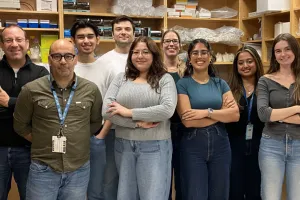
 Dr. Rashmi Kothary's labIt's easy to forget the delicate balance inside the human body until something goes wrong. For people with multiple sclerosis (MS), that moment comes when the immune system mistakenly attacks myelin--the fatty insulating layer that protects nerve cells in the brain and spinal cord. Without myelin, these nerve cells can become damaged, resulting in symptoms such as numbness, muscle stiffness and fatigue.
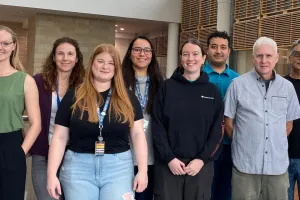
Monique Almeida and Samantha Kornfeld, members of Dr. Rashmi Kothary's team, recently led and published a study in Neurobiology of Disease with a promising experimental treatment. Using a mouse model that mimics progressive MS symptoms, they blocked miR-145, a type of microRNA that blocks myelin production and repair. The results? Reduced inflammation in the brain and spinal cord, increased myelin regeneration and improved neurological function.
This study builds on their previous work with miR-145 and strengthens the case for moving toward clinical trials--bringing new hope for slowing MS progression.
Authors: Monique Marylin Alves de Almeida, Samantha F. Kornfeld, Yves De Repentigny, Majd Al-Aarg, Ibrahim Ghani, Sarah E. Cummings, Emma R. Sutton, Rebecca Yaworski, Kelsea S. McKay, Sabrina Gagnon, Ariane Beauvais, Rashmi Kothary
Funding: Canadian Institutes of Health Research, Multiple Sclerosis Society of Canada, University of Ottawa Brain and Mind Research Institute and éric Poulin Centre for Neuromuscular Disease, Province of Ontario
Core Facilities:
Learn more about:
The Ottawa Hospital is a leading academic health, research and learning hospital proudly affiliated with the University of Ottawa and supported by The Ottawa Hospital Foundation.