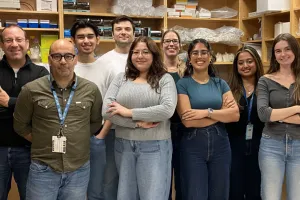
New scientist profile: Immunologist Dr. Laszlo Radvanyi follows curiosity to reshape cancer research
Dr. Laszlo Radvanyi’s journey to become a leading cancer researcher began with curiosity and a willingness to dive into the unknown.
Now, as a senior scientist in the Cancer Research Program at the Ottawa Hospital Research Institute (OHRI), Dr. Radvanyi continues to break new ground in his quest to develop innovative ways to treat, diagnose and prevent cancer.
Initially trained in botany and biochemistry, Dr. Radvanyi found his true calling in immunology during his PhD when he transitioned from into the biomedical sciences, a huge leap considering he’d never taken an immunology course. “I self‑taught myself immunology,” he says, recalling long hours in cellular immunology labs, devouring textbooks, seminars and conversations with colleagues until the field felt like home. “Immunology is such a complex, multi‑dimensional science,” he adds. “I love complex problems.”
That appetite for complexity quickly led him to career‑long questions: Why does the immune system so often stand down in the presence of cancer, and how can we safely release the brakes?
The answers came through a long journey of discovery and opportunity. As a faculty member at the MD Anderson Cancer Center, Dr. Radvanyi helped establish a tumour‑infiltrating lymphocyte (TIL) therapy program for patients with metastatic melanoma, studying how to make the immune system stronger, more persistent and less exhausted. He began to see the link between immunotherapy and the non-coding parts of our genome (also called the “dark genome”), which have often been dismissed as unusable. Among these are endogenous retroelements, viral sequences embedded in our DNA that infected our ancestors and still exist in our bodies today.

“There’s a huge opportunity to leverage the 'dark genome' as a new source of antigen‑specific immunotherapy for cancer and beyond,” says Dr. Laszlo Radvanyi
Dr. Radvanyi wondered: could these retroelements be reactivated in cancer and produce proteins the immune system recognizes as foreign? “There’s a huge opportunity to leverage them as a new source of antigen‑specific immunotherapy for cancer and beyond,” he says.
And that’s just part of his lab’s goal. His team is also working to improve early cancer screening and understand how cancer begins. By detecting signals from endogenous retroelements in blood tests and determining whether these ancient viral sequences help cause cancer or are simply a by-product of it, he hopes to find cancers earlier, monitor their return, and ultimately prevent tumours from forming in the first place by targeting early activation of these elements using novel immunotherapies.
Always the rebel, revelling at the edge of possibility, Dr. Radvanyi’s expertise across academia, biotech and clinical innovation translates discovery into real-world impact. Having previously served as the president and scientific director of the Ontario Institute for Cancer Research (OICR) and formerly leading Iovance Biotherapeutics as its founding Chief Scientific Officer, he has a unique perspective on science and appreciates how rapidly biomedical research can change and advance: “What’s less important today can be hugely important tomorrow,” he says, a philosophy he brings to his new role at OHRI, continuing to strengthen The Ottawa Hospital as a world leader in cancer research.
Learn more about:
The Ottawa Hospital is a leading academic health, research and learning hospital proudly affiliated with the University of Ottawa and supported by The Ottawa Hospital Foundation.