

Baptiste Lacoste
PhD
Senior Scientist, Regenerative Medicine
Ottawa Hospital Research Institute
Program Director, Regenerative Medicine
Ottawa Hospital Research Institute
Professor, Cellular and Molecular Medicine
Faculty of Medicine
Contact
Research Administrative Assistant Sandy Martino | smartino@ohri.ca
Research Groups
Lacoste Lab
Bio
Dr. Baptiste Lacoste's research career started at University of Bordeaux (France) where he developed his passion for neurobiology, for instance studying Parkinson’s disease-associated neuropathological deficits in a mouse model of the disease. Seeking new scientific and life challenges, Dr. Lacoste left France and pursued his graduate training at University of Montreal (2003-2009) under the supervision of Dr. Laurent Descarries. His M.Sc.-Ph.D. work allowed him to acquire a solid expertise in neuroanatomy and neurobiology, while investigating the trafficking of substance P receptors using pharmacology and electron microscopy. Desiring to expand his knowledge in neurobiology of disease, he continued his training with a first postdoc position at the Montreal Neurological Institute, McGill University (2009-2012). From Dr. Edith Hamel’s lab, he investigated the involvement of bradykinin B1 receptor in the cerebrovascular and cognitive deficits associated with Alzheimer’s disease (AD), using transgenic AD mice, neuropharmacology, neuroanatomy, biochemistry, cerebrovascular physiology and animal behavior. During this postdoc, Dr. Lacoste developed a new passion for vascular biology, which motivated him to further investigate the intimate relationships between neuronal and vascular systems in the healthy and diseased brain. To gain a thorough understanding of neurovascular interactions from a developmental (and genetic) point of view, Dr. Lacoste continued with a second postdoc in Boston at Harvard Medical School (2012-2015). From Dr. Chenghua Gu’s lab, he examined the influence of neural activity on cerebrovascular patterning during postnatal development, as well as the mechanisms governing blood-brain barrier formation and integrity. This allowed him to deepen his knowledge of vascular biology and imaging techniques, and to learn the power of mouse genetics. Along his training, Dr. Lacoste thus established an original research niche based on the conviction that studying neurovascular interactions in the healthy and diseased brain is a very promising avenue in neurobiology at both basic and translational levels. 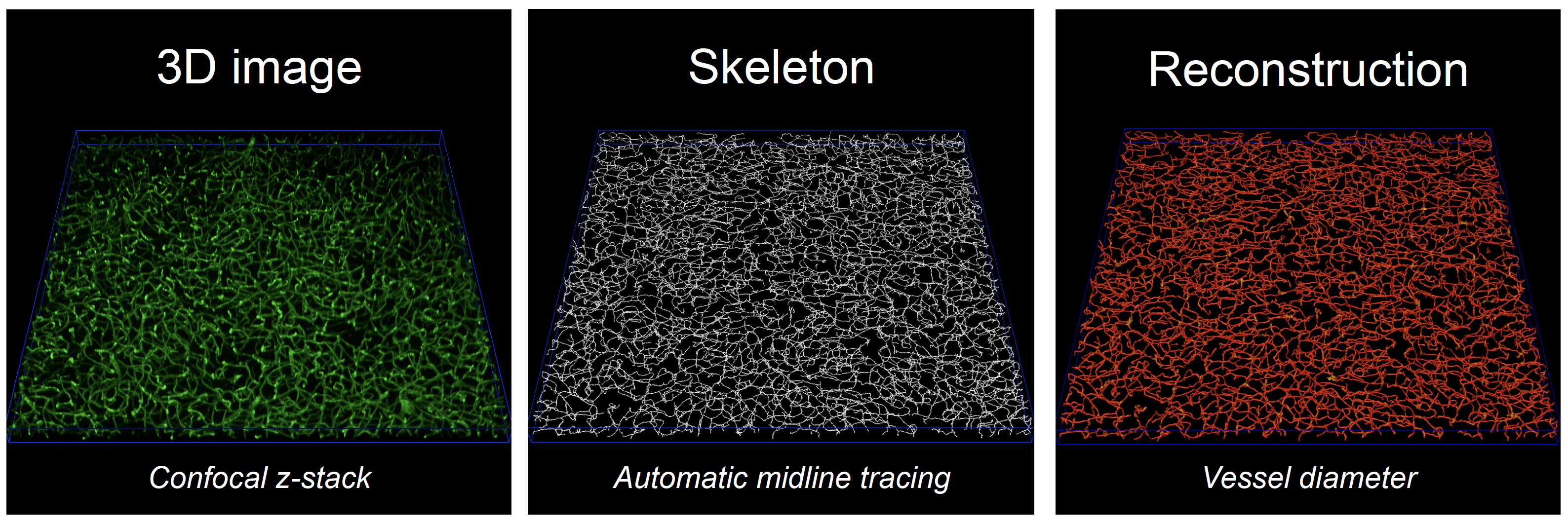
News

Publications
Astroglial Hmgb1 regulates postnatal astrocyte morphogenesis and cerebrovascular maturation
2023-08-16 Go to publication16p11.2 haploinsufficiency reduces mitochondrial biogenesis in brain endothelial cells and alters brain metabolism in adult mice.
2023-05-06 Go to publicationNeonatal hyperoxia in mice triggers long-term cognitive deficits via impairments in cerebrovascular function and neurogenesis.
2022-11-15 Go to publicationAn analysis of the influence of transfer learning when measuring the tortuosity of blood vessels.
2022-07-16 Go to publicationUnbiased analysis of mouse brain endothelial networks from two- or three-dimensional fluorescence images.
2022-05-18 Go to publication