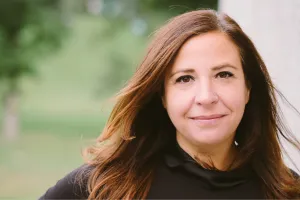
Dr. Philip Wells retires after a remarkable career in medical research

If you’ve ever been diagnosed with a venous blood clot, your care has likely been impacted by Dr. Philip Wells, an internationally renowned clinician scientist at The Ottawa Hospital and professor at the University of Ottawa.
Venous blood clots, which can form in the legs and arms (deep vein thrombosis) and lungs (pulmonary embolism) affect more than a million people each year in Canada and the United States.
When Dr. Wells first started practicing medicine, these potentially deadly clots were difficult to diagnose and treat, often requiring weeks in the hospital.
Today, thanks to Dr. Wells’ research, venous blood clots can be diagnosed quickly in the emergency department and treated almost entirely outside the hospital, with far fewer side effects. In 2014, a top medical journal ranked a diagnostic model developed by Dr. Wells (the Wells Model) as one of the top five most impactful clinical decision rules for use in emergency departments.
Making Ottawa a medical research powerhouse
As Head of the Division of Hematology from 1998 to 2009, Dr. Wells played a key role in building Ottawa into a top global centre for blood research. He also served as Director of Clinical Research for The Ottawa Hospital and its Research Institute for five years. In this role, he built world-class research infrastructure, support and quality systems, resulting in more opportunities for local patients to participate in innovative clinical trials and more rigorous evidence to improve care globally.
Later, as Chair and Chief of the Department of Medicine, Dr. Wells enhanced academic productivity, recruited 160 faculty members, and increased physician engagement, mentorship and training.
“People come here from all over the world to train in the field,” said Dr. Wells. “It’s incredibly rewarding when colleagues recognize the quality of our research enterprise.”
Dr. Wells has been recognized by numerous awards throughout his career, including The Ottawa Hospital’s Researcher of the Year Award in 2004 and Career Achievement Award in 2012, and the University of Ottawa’s Lifetime Achievement Award in 2014. He previously held a Canada Research Chair and a University of Ottawa Faculty of Medicine Distinguished Research Chair in AI and Thromboembolic Diseases. He was also recently was recognized with a Career Achievement award from the Canadian Hematology Society and an Esteemed Career Award from the International Society for Thrombosis and Haemostasis.
While Dr. Wells is retiring, he will maintain an Emeritus Scientist role at the Ottawa Hospital Research Institute and will give a talk at The Ottawa Hospital’s annual Research Week in November 2026.
With over 460 peer-reviewed papers and a tremendous legacy of excellence in research, clinical care and leadership, Dr. Wells’ impact will continue to be felt around the world for many years to come.
Learn more about:
The Ottawa Hospital is a leading academic health, research and learning hospital proudly affiliated with the University of Ottawa and supported by The Ottawa Hospital Foundation.