$24M grant to fast-track the development of cell and gene therapies for Canadians

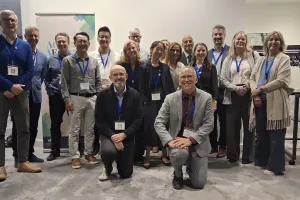
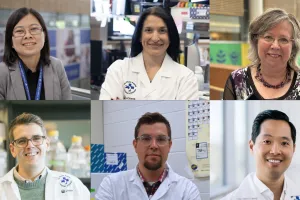
An interdisciplinary team led by Dr. Bernard Thébaud of The Ottawa Hospital, CHEO and the University of Ottawa has received a $24 million grant to fast-track the development of cell and gene therapies for patients with chronic lung diseases.
The grant is one of six projects funded through the federal government’s New Frontiers in Research Funded (NFRF) – Transformation competition.
Dr. Thébaud and his team hope their research will drive a larger shift in the development, approval and adoption of cell and gene therapies across Canada.
Getting these “living” therapies from the lab to patients is challenging. A gene or cell therapy might improve lives in a clinical trial, but is it practical in the real world? Will it be approved by Health Canada? Will provinces and territories agree to pay for it? Where will it be made, and what are the costs? Will it be available to all Canadians, no matter where they live? Will all hospitals be able to deliver it? Will patients even want it?
These are the questions the team will tackle over the next six years, as they launch two clinical trials of cell and gene therapies for infant lung diseases developed by Dr. Thébaud’s lab. The trials themselves are funded by other grants from the Canadian Institutes of Health Research and the Stem Cell Network.
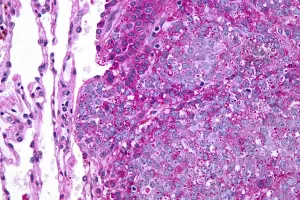
The first is a Phase 2 clinical trial of a cell therapy for a chronic lung disease called bronchopulmonary dysplasia. This national trial of 168 patients follows a successful world-first Phase 1 trial that found the treatment was safe for premature babies.
The second is a first-in-human trial of a gene therapy for a deadly newborn lung disease called ABCA3 deficiency. Most babies with this rare genetic condition die at birth or while waiting for a lung transplant, so treating one patient is enough to show whether the therapy can restore lung function. If successful, this novel gene therapy delivery method could be applied to more common genetic diseases like cystic fibrosis.
“It’s a privilege to be able to bring discoveries we’ve made in the lab to patients, and this funding will help us streamline that process for other researchers,” said Dr. Thébaud, a neonatologist and senior scientist at The Ottawa Hospital and CHEO and professor at the University of Ottawa. “We hope this work drives a paradigm shift so that cell and gene therapy research pathways become better adapted to the Canadian health-care system, and bring affordable, reimbursed treatments to patients.”
Nominated Principal Investigator: Bernard Thébaud
Co-Principal Investigators: Jennifer Quizi, John Bell, Sarah Wootton, Stuart Nicholls, Emilio Alarcon, Amy Zarzeczny, Yang Yang, Ehsan Habibi, Kednapa Thavorn, Manoj Lalu, Justin Presseau.
Co-Applicants: Martin Kang, Jenna Evans, Dean Fergusson, Laurent Renesme, Jean-Simon Diallo, Andras Nagy, Silke Mader, Fabiana Bacchini, Duncan Stewart.
Collaborators : Alice Tarantal, John Engelhardt, Charlotte Moore Hepburn, Theo Moraes, Ashley Cooney, Ashley Cooney, James Bridges, David Moher, Paul Eckford, Lori Anderson, (Jennifer) Jim Meunier, Ann Gettys, Thierry Lacaze-Masmonteil, Cate Murray, Ella Korets-Smith, Rose Vicky Maldonado, Jennifer Wambach, Nadia Nathan, Larry Nogee, Matthias Griese, Marc Beltempo, Hartmut Grasemann, Steven Seidner, Jeffrey Whitsett, Steve Abman, Paula Robeson, Mervin Yoder, Daphne Merkus.
Patient partner organizations: Canadian Premature Baby Foundation (CPBF), The Global Foundation for the Care of Newborn Infants (GFCNI), chILD (Children's Interstitial and Diffuse Lung Disease) Foundation.
Core Facilities:
Learn more about:
Media Contact
Amelia Buchanan
Senior Communications Specialist
Ottawa Hospital Research Institute
ambuchanan@ohri.ca
613-297-8315
The Ottawa Hospital is a leading academic health, research and learning hospital proudly affiliated with the University of Ottawa and supported by The Ottawa Hospital Foundation.