

Pierre Mattar
PhD
Senior Scientist, Regenerative Medicine
Ottawa Hospital Research Institute
Assistant Professor, Cellular and Molecular Medicine
University of Ottawa
Clifford, Gladys and Lorna J. Wood Chair for Research in Vision
Research Goals and Interests
1) Understanding how the developmental potential of retinal progenitors is controlled.
The remarkable cognitive abilities of the human brain depend on specialized circuits. These circuits in turn depend upon the developmental production of a constellation of different types of neurons. In the retina, more than 100 different types of neurons are generated by a single pool of neural progenitor cells. How do neural progenitor cells orchestrate the production of this complex cellular diversity?
The lab aims to decipher how changes in the developmental potential of retinal progenitors are controlled to diversify cell production from retinal progenitors, and to harness these processes so that desired cells can be produced efficiently. We are focused on unravelling how transcription factors and chromatin remodellers cooperate to control the development of retinal cell types.
2) Chromatin remodellers and neurodevelopmental disorders
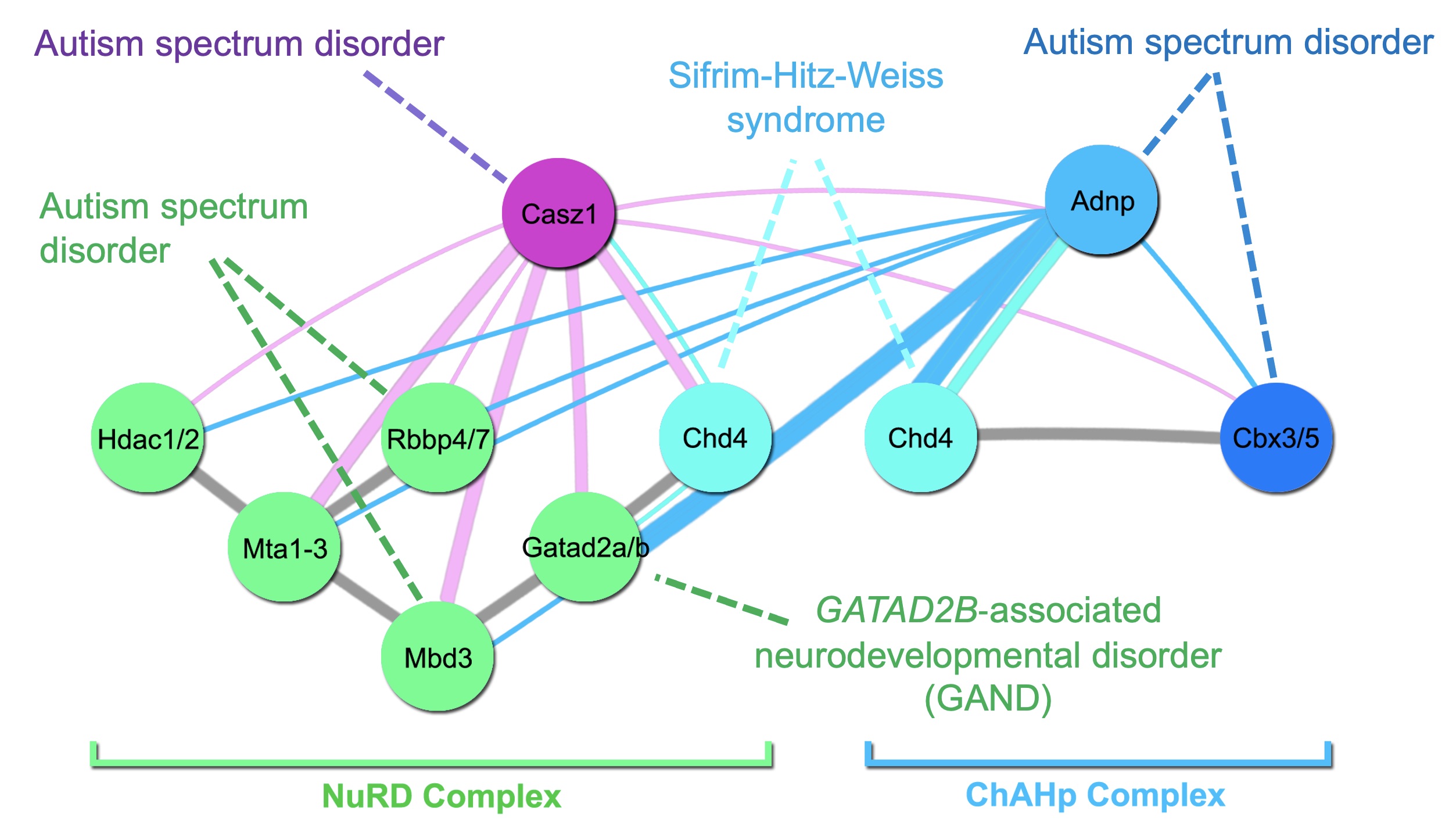
Over the past 10-15 years, sequencing studies have revealed the genetic underpinnings of neurodevelopmental disorders. Across this genetic landscape, chromatin remodelling genes have emerged as one of the most important categories. We are focused on understanding how the NuRD and ChAHP chromatin remodelling complexes regulate neurodevelopment, and how these developmental processes are altered by genetic mutation.
3) Understanding the role of higher order nuclear organization in retinal cell death.
Photoreceptor cells are among the most energetically demanding cells in the body, and are particularly vulnerable to pathological insult. Indeed photoreceptor cell death underlies some of the most common forms of neurodegenerative disease, including age-related macular degeneration and retinitis pigmentosa. These disorders are associated with transcriptional dysregulation. We recently showed that rod photoreceptor nuclei undergo higher order genome reorganization in mouse models of retinitis pigmentosa. Our future goal is to decipher how genome regulation underlies adaptive and maladaptive genetic programs.
To learn more about the kind of work we do, click the "Technologies" tab on the left hand side of the page.
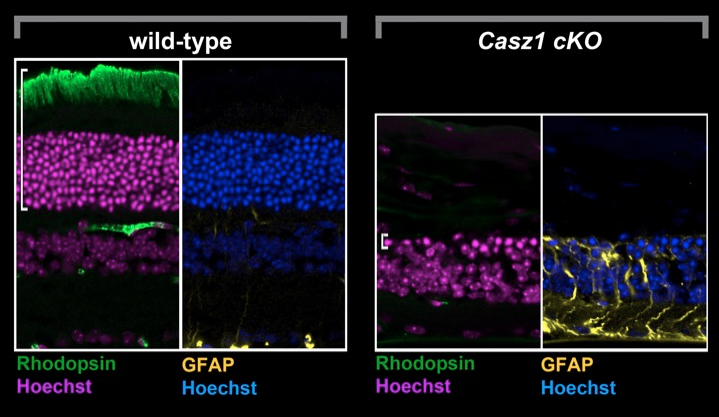
Age-dependent retinal degeneration in Casz1 conditional mutant retinas (PNAS 115: E7987).
1) Genetic modification of neural progenitors.
The lab has expertise in a number of techniques to manipulate retinal progenitors both in vivo and in culture, including mouse genetics, retroviral transduction, and electroporation. Developing retinas can be explanted and grown in tissue culture, which facilitates a variety of experimental approaches.
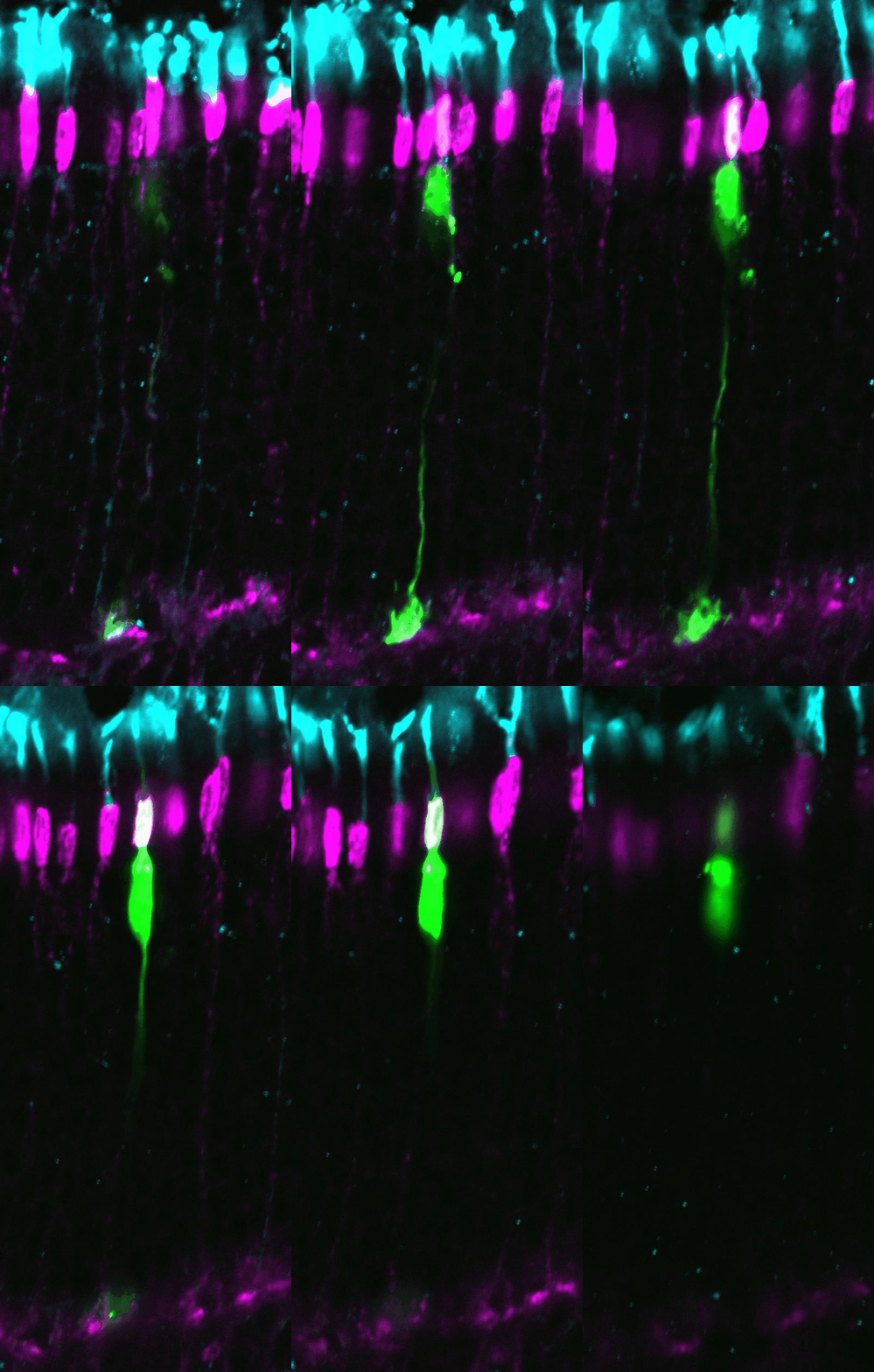
Cone derived from progenitors transfected with green fluorescent protein at embryonic day 14.5 via in utero retinal electroporation, and allowed to develop until postnatal day 21. Cone opsin (cyan) and peanut agglutinin (magenta) mark the cone photoreceptors.
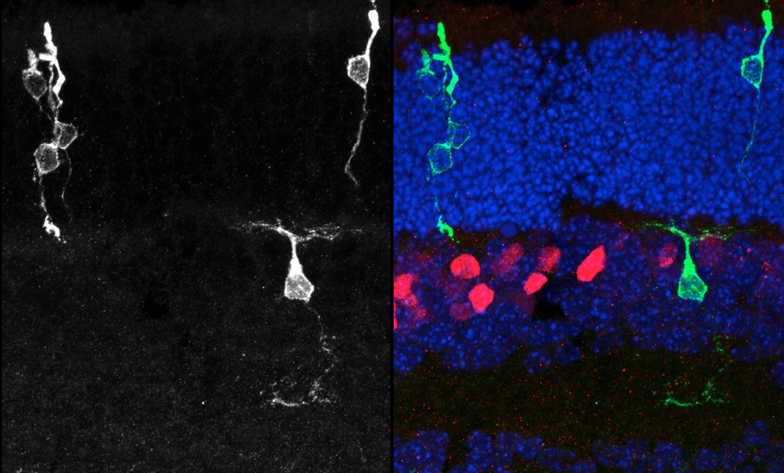
Clonal analysis allows the complete lineage generated by individual progenitor cells to be analyzed. Here, retroviral clones (green) generated from dividing progenitors transduced at postnatal day 0, and harvested 2 weeks later. Vsx2 protein staining marks bipolar cells (red), while Hoechst stains the DNA (blue), allowing the tissue to be visualized in full. The clone on the left contains 3 rods, while the clone on the right contains a rod and a bipolar cell.
2. Proteomics
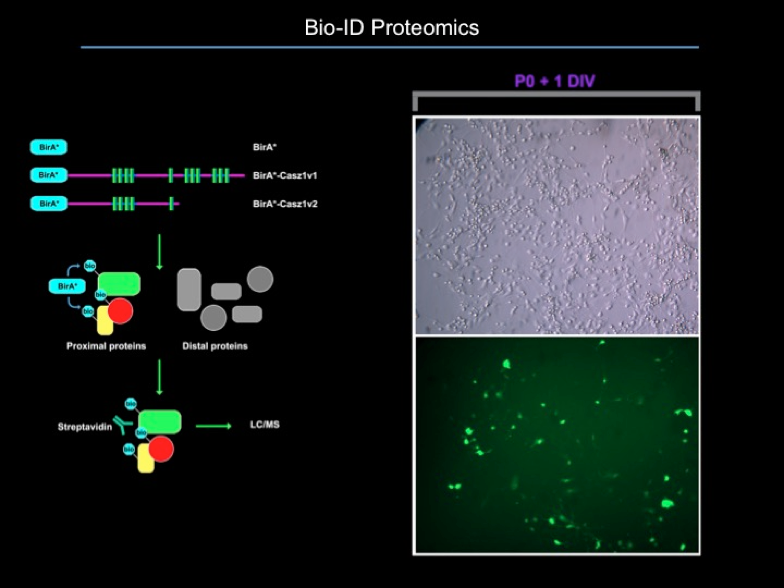
We perform Bio-ID on primary retinal cultures, as well as co-IP/MS on tissue.
3. Genomics and transcriptomics
We use cut&run-seq and ATAC-seq to examine how nucleosome remodelling complexes interact with the genome.
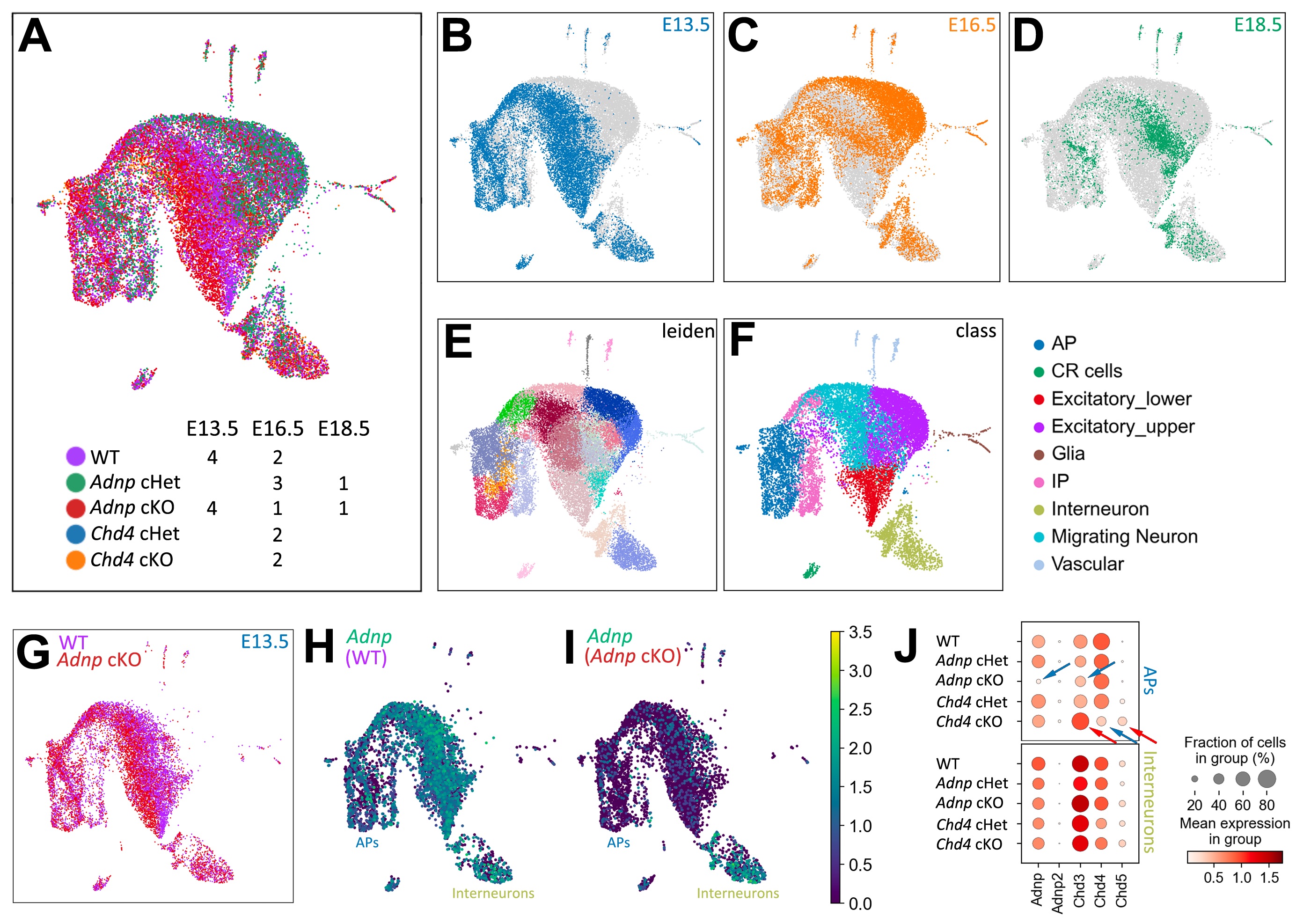
We use multi-seq Multi-seq to perform multiplexed single cell RNA-seq. See Clemot-Dupont et al.
News


Publications
An allelic series reveals the genetic requirement for Adnp in cortical neurogenesis and learning behavior
2026-06-11 Go to publicationChd4 remodels chromatin to control retinal cell type specification and lineage termination
2025-10-15 Go to publicationThe chromatin remodeler ADNP regulates neurodevelopmental disorder risk genes and neocortical neurogenesis.
2025-01-14 Go to publicationChd4 remodels chromatin to control retinal cell type specification and lineage termination
2025-01-10 Go to publicationPten regulates endocytic trafficking of cell adhesion and Wnt signaling molecules to pattern the retina.
2024-03-27 Go to publicationRelated Research at The Ottawa Hospital
- Regenerative Medicine Program
- Glaucoma
- Intellectual disabilities
- Macular degeneration
- Retinal disease
- Vision
- Autism
- Autoimmune diseases of the nervous system
- Discovery research
- Genetics
- Genomics
- Bioinformatics
- Model organisms
- Molecular and cellular biology
- Proteomics
- Regenerative medicine
- Epigenetics
- Transgenic/knockout models
- Cell therapy
- Gene expression
- Systems biology
- Stem cells